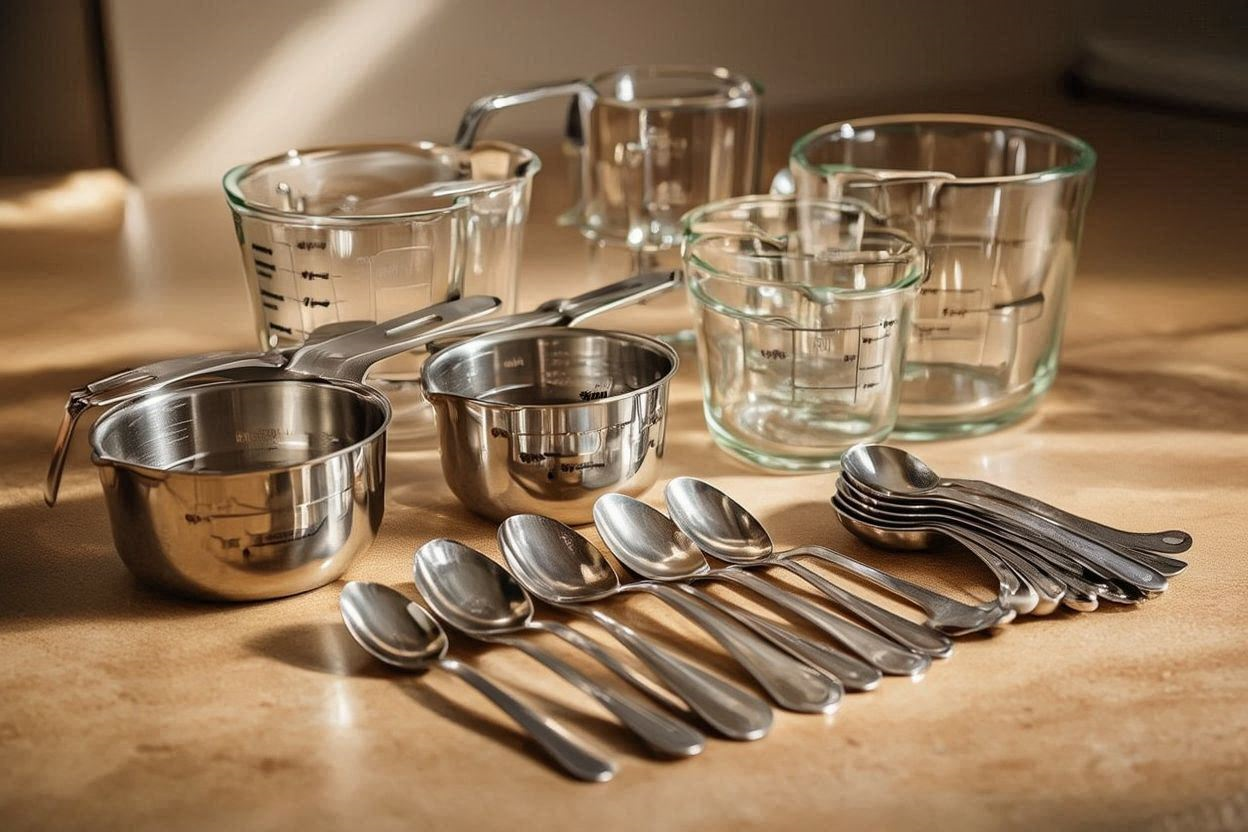
⚠️ Critical warning for international cooks: A US cup (240 ml), metric cup (250 ml), and UK cup (284 ml) are three completely different sizes. Using the wrong one means your recipe is already wrong before you start cooking. This guide tells you exactly which one to use — and when.
240 ml = 1 US cup. To convert any ml amount to cups: divide by 240. For metric cups (Australia, Canada) divide by 250. For UK cups divide by 284. Use the complete charts below for instant conversions — no calculator needed.
Whether you are a home cook converting a recipe from a foreign website, a culinary student working between metric and imperial systems, a barista measuring espresso shots, or a nurse calculating medication doses — this is the most complete ml to cups reference available. Every value is accurate to 2 decimal places and verified against NIST (National Institute of Standards and Technology) measurement standards.
ml to Cups — Complete Conversion Table (US, Metric and UK)
| Millilitres | US Cups | Metric Cups (AU) | UK Cups | Fluid Oz | Tablespoons |
|---|---|---|---|---|---|
| 5 ml | 0.02 cups | 0.02 cups | 0.02 cups | 0.17 fl oz | 1 tsp |
| 15 ml | 0.06 cups | 0.06 cups | 0.05 cups | 0.5 fl oz | 1 tbsp |
| 30 ml | 0.13 cups | 0.12 cups | 0.11 cups | 1 fl oz | 2 tbsp |
| 50 ml | 0.21 cups | 0.20 cups | 0.18 cups | 1.69 fl oz | 3.4 tbsp |
| 60 ml | 1/4 cup | 0.24 cups | 0.21 cups | 2 fl oz | 4 tbsp |
| 80 ml | 1/3 cup | 0.32 cups | 0.28 cups | 2.7 fl oz | 5.4 tbsp |
| 100 ml | 0.42 cups | 0.40 cups | 0.35 cups | 3.38 fl oz | 6.8 tbsp |
| 120 ml | 1/2 cup | 0.48 cups | 0.42 cups | 4 fl oz | 8 tbsp |
| 125 ml | 0.52 cups | 1/2 cup | 0.44 cups | 4.23 fl oz | 8.3 tbsp |
| 150 ml | 0.63 cups | 0.60 cups | 0.53 cups | 5.07 fl oz | 10 tbsp |
| 160 ml | 2/3 cup | 0.64 cups | 0.56 cups | 5.41 fl oz | 10.8 tbsp |
| 180 ml | 3/4 cup | 0.72 cups | 0.63 cups | 6 fl oz | 12 tbsp |
| 200 ml | 0.83 cups | 0.80 cups | 0.70 cups | 6.76 fl oz | 13.3 tbsp |
| 240 ml | 1 cup | 0.96 cups | 0.85 cups | 8 fl oz | 16 tbsp |
| 250 ml | 1.04 cups | 1 cup | 0.88 cups | 8.45 fl oz | 16.7 tbsp |
| 300 ml | 1.25 cups | 1.20 cups | 1.06 cups | 10.1 fl oz | 20 tbsp |
| 360 ml | 1.5 cups | 1.44 cups | 1.27 cups | 12.2 fl oz | 24 tbsp |
| 400 ml | 1.67 cups | 1.60 cups | 1.41 cups | 13.5 fl oz | 26.7 tbsp |
| 480 ml | 2 cups | 1.92 cups | 1.69 cups | 16 fl oz | 32 tbsp |
| 500 ml | 2.08 cups | 2 cups | 1.76 cups | 16.9 fl oz | 33.3 tbsp |
| 600 ml | 2.5 cups | 2.40 cups | 2.11 cups | 20.3 fl oz | 40 tbsp |
| 720 ml | 3 cups | 2.88 cups | 2.54 cups | 24.3 fl oz | 48 tbsp |
| 750 ml | 3.13 cups | 3 cups | 2.64 cups | 25.4 fl oz | 50 tbsp |
| 960 ml | 4 cups | 3.84 cups | 3.38 cups | 32.5 fl oz | 64 tbsp |
| 1000 ml (1L) | 4.23 cups | 4 cups | 3.52 cups | 33.8 fl oz | 66.7 tbsp |
The Most Searched ml Amounts — Instant Answers
These are the exact ml amounts people search for most frequently. If you came to this page for one specific conversion — here it is.
| Search Query | US Cups | Fraction | Practical Kitchen Guide |
|---|---|---|---|
| 50 ml in cups | 0.21 cups | ~1/5 cup | 3 tbsp + 1 tsp |
| 100 ml in cups | 0.42 cups | ~scant 1/2 cup | 6 tbsp + 2 tsp |
| 125 ml in cups | 0.52 cups | ~just over 1/2 cup | 1/2 cup + 1 tsp |
| 150 ml in cups | 0.63 cups | ~2/3 cup | 10 tbsp |
| 175 ml in cups | 0.73 cups | ~3/4 cup | 11 tbsp + 2 tsp |
| 200 ml in cups | 0.83 cups | ~scant 1 cup | 13 tbsp + 1 tsp |
| 250 ml in cups | 1.04 cups | ~1 cup + 1 tsp | 1 US cup + 1 tbsp |
| 300 ml in cups | 1.25 cups | 1 + 1/4 cups | 1 cup + 4 tbsp |
| 350 ml in cups | 1.46 cups | ~1 + 1/2 cups | 1 cup + 7 tbsp |
| 400 ml in cups | 1.67 cups | ~1 + 2/3 cups | 1 cup + 10 tbsp |
| 500 ml in cups | 2.08 cups | ~2 cups | 2 cups + 1 tbsp |
| 750 ml in cups | 3.13 cups | ~3 cups | 3 cups + 2 tbsp |
| 1000 ml in cups | 4.23 cups | ~4 cups | 4 cups + 3 tbsp |
US Cup vs Metric Cup vs UK Cup — The Difference That Ruins Recipes
This is the single most misunderstood aspect of international cooking. The word “cup” means three completely different things depending on where the recipe comes from. Getting this wrong by just one cup size can throw a recipe off by 44ml — enough to completely change the texture of baked goods.
| Cup Type | ml | fl oz | Used In | Common In |
|---|---|---|---|---|
| US Cup | 240 ml | 8 fl oz | USA | Most websites, Netflix cooking shows, American cookbooks |
| Metric Cup | 250 ml | 8.45 fl oz | Australia, Canada, NZ, SA | Donna Hay, Australian Women’s Weekly, Canadian recipes |
| UK/Imperial Cup | 284 ml | 10 fl oz | Older UK recipes | Pre-1970s British cookbooks — rarely used today |
| Japanese Cup | 200 ml | 6.76 fl oz | Japan | Japanese rice cookers, traditional Japanese recipes |
⚠️ Real-world impact: If you use a metric cup (250ml) instead of a US cup (240ml) for a recipe needing 4 cups of liquid — you will add 40ml extra. For soups and stews this is fine. For bread dough or cake batter, 40ml extra liquid can prevent the gluten from developing properly and cause the structure to collapse.
The 4 Biggest ml to Cups Mistakes — And How Professionals Avoid Them
| Mistake | What Goes Wrong | Professional Fix |
|---|---|---|
| Reading liquid measuring cups from above | Parallax error adds 5-10ml per reading — multiplies across multiple measurements | Always read at eye level on a flat surface |
| Using the same cup for dry and liquid ingredients | Dry measuring cups cannot be read accurately for liquids and vice versa | Keep separate sets — liquid jug for ml, dry cups for flour and sugar |
| Assuming 250ml = 1 cup for all recipes | Only true for metric cups — US recipes use 240ml, causing systematic under or over-measuring | Check recipe origin before starting — US or metric? |
| Measuring small amounts (under 30ml) in a jug | Graduated markings on jugs are too far apart for accuracy below 30ml | Use measuring spoons: 5ml = 1 tsp, 15ml = 1 tbsp, 30ml = 2 tbsp |
ml to Cups for Specific Liquids — Cooking Reference
Different liquids behave differently in recipes. Here are the most common liquid ingredients in cooking and baking with their exact ml-to-cup conversions and practical kitchen notes.
| Liquid | 240ml (1 US cup) | 120ml (1/2 cup) | Kitchen Note |
|---|---|---|---|
| Water | 240g / 240ml | 120g / 120ml | 1ml = 1g exactly |
| Whole milk | 245g / 240ml | 123g / 120ml | Slightly heavier than water |
| Heavy cream | 238g / 240ml | 119g / 120ml | Nearly same as water by volume |
| Vegetable oil | 218g / 240ml | 109g / 120ml | Lighter than water |
| Honey | 340g / 240ml | 170g / 120ml | Much heavier — always weigh |
| Maple syrup | 322g / 240ml | 161g / 120ml | Weigh for accuracy |
| Buttermilk | 245g / 240ml | 123g / 120ml | Same as whole milk |
| Coconut milk | 240g / 240ml | 120g / 120ml | Same as water by volume |
Hidden Kitchen Hacks — ml Conversions Professionals Use Daily
These are the practical shortcuts used in professional kitchens, culinary institutes, and test kitchens worldwide. Most home cooks never learn them.
- The water-weight shortcut: For water and milk, ml and grams are interchangeable (1ml = 1g). This means if your scale only shows grams and your recipe says 240ml of water — just weigh 240g. Exact same result, no conversion needed.
- The tablespoon bridge: Can’t find your measuring cup? Use tablespoons as a bridge. 1 US cup = 16 tablespoons. So 1/2 cup = 8 tbsp, 1/4 cup = 4 tbsp. This works for any liquid accurately.
- The wine bottle reference: A standard 750ml wine bottle = just over 3 US cups (3.13 cups exactly). Restaurant chefs use this as a mental anchor when scaling stock recipes.
- The espresso shot standard: A single espresso shot = 30ml = 2 tablespoons = 1/8 cup. A double shot = 60ml = 1/4 cup. Useful for coffee-flavoured baking recipes.
- The medicine spoon rule: Medical dosing uses exactly 5ml per teaspoon. This matches the kitchen teaspoon exactly — so medication instructions and baking recipes use the same teaspoon size. No conversion needed between them.
- Scaling up recipes: To double any ml amount just multiply by 2. To halve it, divide by 2. For thirds: multiply by 0.333. These simple multipliers work for any recipe scaling without needing new cup measurements.
The Formula — Convert Any ml to Cups Instantly
US Cups = ml ÷ 240
Example: 360ml ÷ 240 = 1.5 cups | 600ml ÷ 240 = 2.5 cups
Metric Cups = ml ÷ 250
Example: 500ml ÷ 250 = 2 cups | 750ml ÷ 250 = 3 cups
ml = US Cups × 240
Example: 1.5 cups × 240 = 360ml | 3 cups × 240 = 720ml
How to Correctly Measure ml in the Kitchen
- Use a clear liquid measuring jug with both ml and cup markings — place it on a flat surface before pouring, never hold it in the air.
- Pour then check at eye level — crouch down so the measurement line is at your eye level. Reading from above creates a parallax error that adds 5-10ml per measurement.
- For amounts under 30ml use measuring spoons — 1 teaspoon = 5ml, 1 tablespoon = 15ml, 2 tablespoons = 30ml. Jugs are inaccurate for small volumes.
- For honey, maple syrup and thick liquids — spray the measuring cup lightly with cooking spray first. The liquid slides out completely with zero residue, giving you a more accurate measurement.
- For the highest precision — use a digital scale. Water and most thin liquids have a density of approximately 1g per ml, so 240g of water = 240ml = 1 cup. No jug needed.
Frequently Asked Questions
How many cups is 100 ml?
100 ml = 0.42 US cups — just under half a cup. In practical kitchen terms, 100ml = 6 tablespoons + 2 teaspoons. For precise baking always measure 100ml directly rather than approximating to 1/2 cup, as the 20ml difference affects delicate recipes like soufflés and custards.
How many cups is 250 ml?
250 ml = 1.04 US cups — just barely over 1 US cup. However 250ml = exactly 1 metric cup (Australia, Canada, New Zealand). If your recipe is from one of these countries, 250ml = 1 cup exactly with no adjustment needed. For more on cup sizes by country see our complete guide on how many ml in a cup.
How many cups is 500 ml?
500 ml = 2.08 US cups — just over 2 cups. A standard 500ml water bottle contains slightly more than 2 US cups. In metric countries, 500ml = exactly 2 metric cups. For fluid ounce conversions see our guide on how many ounces in a cup.
How many cups is 200 ml?
200 ml = 0.83 US cups — just under 1 cup. This equals approximately 13 tablespoons + 1 teaspoon. Note that 200ml is exactly 1 Japanese cup — the size used in Japanese rice cooker measurements and traditional Japanese recipes.
How many cups is 300 ml?
300 ml = 1.25 US cups (1 cup + 1/4 cup = 1 cup + 4 tablespoons). This is a very common soup and sauce measurement. For tablespoon conversions see our guide on how many tablespoons in a cup.
Is 240 ml the same as 1 cup?
Yes — for US cups. 1 US cup = 240ml exactly. This is the standard used by the vast majority of English-language recipe websites, American cookbooks, and cooking videos. If your recipe does not specify cup size, assume 240ml. For tablespoon-to-ml conversions see our guide on tablespoon to ml.
📌 Summary — ml to Cups
• 60 ml = 1/4 cup
• 80 ml = 1/3 cup
• 120 ml = 1/2 cup
• 160 ml = 2/3 cup
• 180 ml = 3/4 cup
• 240 ml = 1 cup
• 300 ml = 1.25 cups
• 480 ml = 2 cups
• 500 ml = 2.08 cups
• 750 ml = 3.13 cups
• 1000 ml = 4.23 cups
• Formula: ml ÷ 240 = US cups
Related: ml in a cup · Ounces in a cup · Tablespoon to ml · Oz to cups · Cups in a gallon · Cups to grams