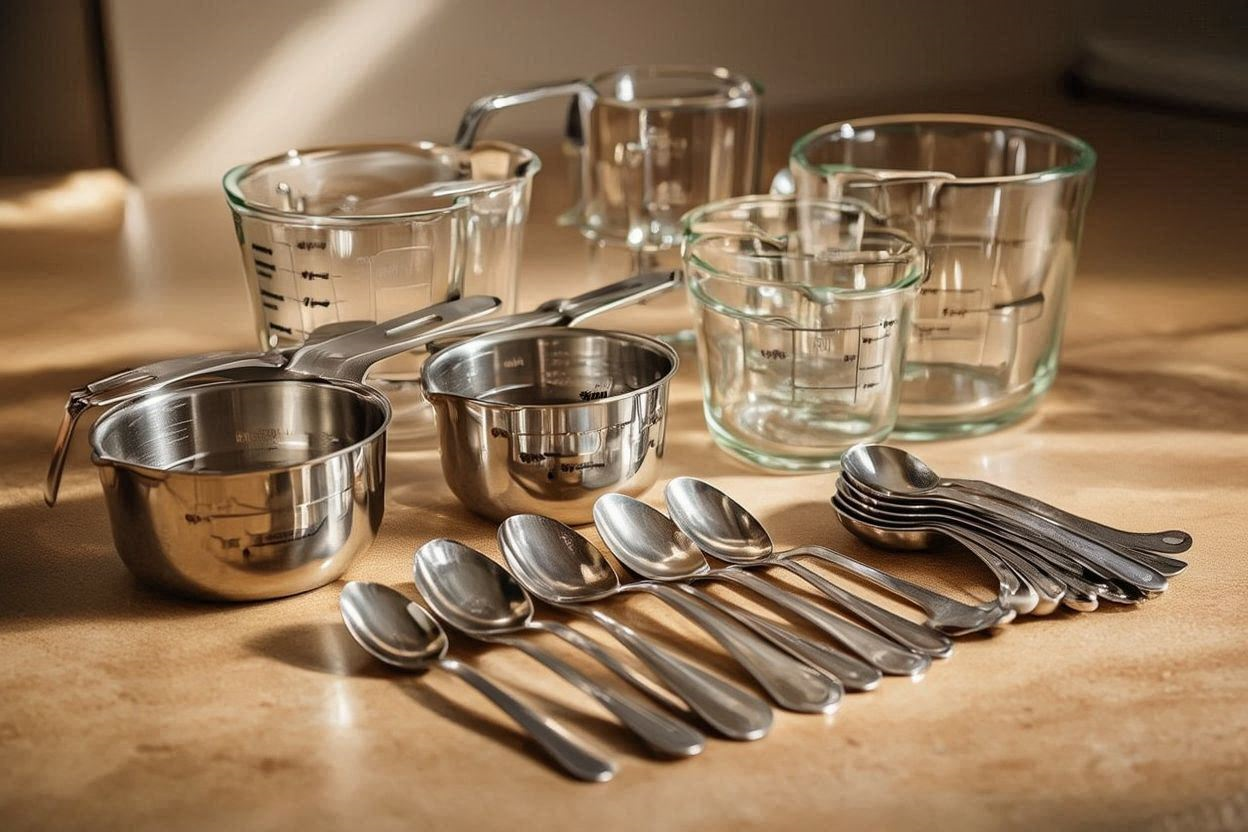
⚠️ The tablespoon you use at the dinner table is NOT the same as a measuring tablespoon. Regular cutlery tablespoons vary from 7ml to 20ml depending on the brand. Using them instead of a proper measuring spoon can throw your recipe off by 30% or more — enough to ruin a sauce, over-salt a dish, or prevent bread from rising.
1 US tablespoon = 14.8 ml (rounded to 15 ml in all recipes). 1 UK/Australian tablespoon = 20 ml. 1 metric tablespoon = 15 ml. These are three different sizes — and using the wrong one is one of the most common cooking mistakes worldwide. Use the complete charts below to never get confused again.
From medicine doses to cocktail bartending, from baking spice blends to scaling restaurant recipes — tablespoon to ml conversions appear in almost every area of cooking and food preparation. This is the most complete tablespoon-to-ml reference available, covering US, UK, Australian, and metric systems with practical kitchen examples for every level of cook.
Tablespoon to ml — Complete Conversion Table (US, UK & Metric)
| Tablespoons | US ml (14.8ml) | UK/AU ml (20ml) | Metric ml (15ml) | Teaspoons | Cups |
|---|---|---|---|---|---|
| 1/4 tbsp | 3.7 ml | 5 ml | 3.75 ml | 3/4 tsp | — |
| 1/2 tbsp | 7.4 ml | 10 ml | 7.5 ml | 1.5 tsp | — |
| 1 tbsp | 14.8 ml | 20 ml | 15 ml | 3 tsp | 1/16 cup |
| 1.5 tbsp | 22.2 ml | 30 ml | 22.5 ml | 4.5 tsp | — |
| 2 tbsp | 29.6 ml | 40 ml | 30 ml | 6 tsp | 1/8 cup |
| 3 tbsp | 44.4 ml | 60 ml | 45 ml | 9 tsp | 3/16 cup |
| 4 tbsp | 59.1 ml | 80 ml | 60 ml | 12 tsp | 1/4 cup |
| 5 tbsp | 73.9 ml | 100 ml | 75 ml | 15 tsp | 5/16 cup |
| 6 tbsp | 88.7 ml | 120 ml | 90 ml | 18 tsp | 3/8 cup |
| 7 tbsp | 103.6 ml | 140 ml | 105 ml | 21 tsp | 7/16 cup |
| 8 tbsp | 118.3 ml | 160 ml | 120 ml | 24 tsp | 1/2 cup |
| 10 tbsp | 147.9 ml | 200 ml | 150 ml | 30 tsp | 5/8 cup |
| 12 tbsp | 177.4 ml | 240 ml | 180 ml | 36 tsp | 3/4 cup |
| 16 tbsp | 236.6 ml | 320 ml | 240 ml | 48 tsp | 1 cup |
| 24 tbsp | 354.9 ml | 480 ml | 360 ml | 72 tsp | 1.5 cups |
| 32 tbsp | 473.2 ml | 640 ml | 480 ml | 96 tsp | 2 cups |
The Critical Difference — US vs UK vs Australian Tablespoon
This is the most misunderstood measurement difference in international cooking. The word “tablespoon” is used globally — but it means three completely different volumes depending on where the recipe comes from.
| Tablespoon Type | ml | Used In | Real-World Impact |
|---|---|---|---|
| US Tablespoon | 14.79 ml | USA, Canada (sometimes) | Standard for most recipe websites and American cookbooks |
| UK Tablespoon | 17.76 ml | Older UK recipes | 20% more than US — 3 tbsp UK = almost 4 tbsp US |
| Australian Tablespoon | 20 ml | Australia | 35% more than US — causes significant over-seasoning |
| Metric Tablespoon | 15 ml | Most modern international recipes | Closest to US — 1.4% difference, negligible in most recipes |
⚠️ Real example of what goes wrong: An Australian recipe calls for 3 tablespoons of salt. If you use US measuring spoons, you get 44ml of salt. If you use Australian tablespoons, you get 60ml — 36% more salt. That is the difference between a perfectly seasoned dish and an inedible one.
Most Searched Tablespoon Conversions — Instant Answers
These are the exact tablespoon amounts people search for most. If you need one of these right now — here it is.
| Search Query | US ml | Practical Alternative | Used For |
|---|---|---|---|
| 1 tablespoon in ml | 14.8 ml | 15 ml (metric) | Spice blends, medicine doses |
| 2 tablespoons in ml | 29.6 ml | 30 ml = 1 fl oz | Cocktails, dressings, sauces |
| 3 tablespoons in ml | 44.4 ml | 45 ml | Marinades, coffee recipes |
| 4 tablespoons in ml | 59.1 ml | 60 ml = 1/4 cup | Baking, butter measurements |
| 5 tablespoons in ml | 73.9 ml | 75 ml | Recipe scaling |
| 6 tablespoons in ml | 88.7 ml | 90 ml | Salad dressings |
| 8 tablespoons in ml | 118.3 ml | 120 ml = 1/2 cup | Butter, oil, flour |
| 10 tablespoons in ml | 147.9 ml | 150 ml | Large batch sauces |
| 12 tablespoons in ml | 177.4 ml | 180 ml = 3/4 cup | Baking recipes |
| 16 tablespoons in ml | 236.6 ml | 240 ml = 1 cup | Full cup equivalent |
Tablespoon to ml by Ingredient — What Actually Matters
The same tablespoon volume weighs differently depending on the ingredient. This matters when you are trying to substitute weight measurements for volume ones in a recipe.
| Ingredient | 1 US Tablespoon (15ml) | Weight in Grams | Kitchen Note |
|---|---|---|---|
| Water | 15 ml | 15g | 1ml = 1g exactly |
| Milk | 15 ml | 15.4g | Practically same as water |
| Olive oil | 15 ml | 13.5g | Lighter than water |
| Honey | 15 ml | 21g | Much heavier — always weigh |
| Maple syrup | 15 ml | 20g | Similar to honey |
| All-purpose flour | 15 ml | 7.5g | Very light — half the water weight |
| Granulated sugar | 15 ml | 12.5g | Lighter than water |
| Salt (table) | 15 ml | 17g | Heavier than water |
| Butter (melted) | 15 ml | 14.2g | Close to water weight |
| Cocoa powder | 15 ml | 5.3g | Very light and airy |
| Baking powder | 15 ml | 14g | Close to water weight |
The 5 Tablespoon Mistakes That Ruin Recipes
| Mistake | Result | Fix |
|---|---|---|
| Using cutlery tablespoon instead of measuring spoon | Off by up to 30% — ruins salt, spice, and leavening balance | Always use a proper calibrated measuring spoon set |
| Heaping instead of levelling dry ingredients | A heaped tablespoon of flour = 15-18g instead of 7.5g — doubles the amount | Level all dry tablespoons with a flat knife |
| Not knowing if recipe uses US or Australian tablespoons | Australian tbsp (20ml) vs US tbsp (15ml) = 33% difference per spoon | Check recipe country of origin. Australian food blogs use 20ml |
| Measuring honey or thick syrups in tablespoons | Residue sticks to spoon — you lose 10-20% of the actual amount | Spray spoon with oil first, or weigh directly on a tared scale |
| Converting tablespoons to ml mentally without a chart | Rounding errors compound across multiple tablespoon measurements | Use this chart for exact values every time |
Pro Kitchen Hacks — Tablespoon Shortcuts Chefs Use Daily
- The 3-teaspoon rule: 1 tablespoon = exactly 3 teaspoons in every measurement system. This is the most useful kitchen conversion to memorize — it lets you use teaspoon spoons when your tablespoon measure is dirty or missing.
- The 30ml cocktail standard: In professional bartending, 2 tablespoons = 1 fl oz = 30ml = 1 standard shot. Knowing this lets you use measuring spoons as a backup to a jigger for any cocktail recipe.
- The butter stick shortcut: A standard US butter stick = 8 tablespoons = 113g = 1/2 cup. The wrapper has tablespoon markings — use them directly without measuring spoons at all.
- The medicine dose match: Medical dosing spoons are calibrated to exactly 5ml (teaspoon) and 15ml (tablespoon) — the same as metric kitchen measuring spoons. A medicine tablespoon works perfectly in metric recipes.
- The espresso double shot: A standard double espresso = 60ml = 4 tablespoons = 1/4 cup. Essential for tiramisu, coffee cakes, and mocha recipes.
- Scaling spice blends: When scaling a spice blend recipe up or down, convert everything to ml first, then scale, then convert back to tablespoons. This prevents rounding errors from compounding across multiple spices.
Tablespoons to ml — Cooking Application Reference
| Application | Typical Amount | ml Equivalent | Why It Matters |
|---|---|---|---|
| Yeast (active dry) | 1 packet = 2.25 tsp | 11 ml | Too much kills bread rise. Too little = flat loaf |
| Baking powder | 1 tsp per cup flour | 5 ml | Over-measuring causes metallic taste and collapse |
| Salt in bread | 1.5 tsp per 3 cups flour | 7.5 ml | Controls yeast fermentation rate |
| Vanilla extract | 1 tsp per cake | 5 ml | Too much = bitter aftertaste |
| Soy sauce | 1-2 tbsp | 15-30 ml | Highly concentrated — exact amounts critical |
| Fish sauce | 1 tbsp | 15 ml | Even stronger than soy — measure exactly |
| Worcestershire sauce | 1 tbsp | 15 ml | Complex flavour — exact amount matters |
| Apple cider vinegar | 1-2 tbsp | 15-30 ml | Activates baking soda in recipes |
How to Correctly Measure Tablespoons
- Use calibrated measuring spoons only — not cutlery. A proper set costs under $10 and lasts a lifetime. It is the most important small purchase any home cook can make.
- For dry ingredients — level off with a flat knife or spatula. Never use a heaping tablespoon unless the recipe explicitly says “heaped” or “rounded.”
- For liquids — fill to the brim on a flat surface. Hold the spoon steady and pour slowly to the edge without letting it overflow.
- For sticky ingredients (honey, peanut butter, syrup) — spray the spoon with a light coat of cooking oil first. The ingredient slides off completely, giving you the full measured amount with zero waste.
- For the highest accuracy — weigh on a digital scale. Use the ingredient weight chart above to find the gram equivalent for your specific ingredient.
Frequently Asked Questions
How many ml is 1 tablespoon?
1 US tablespoon = 14.8 ml (rounded to 15 ml). 1 Australian tablespoon = 20 ml. 1 UK tablespoon = 17.7 ml. The metric standard used in most modern international recipes is 15 ml. When in doubt, use 15 ml as your tablespoon value. For ml to cup conversions see our ml to cups guide.
Is 15 ml the same as 1 tablespoon?
Yes — in practical cooking, 15 ml = 1 tablespoon. The US tablespoon is technically 14.79 ml which rounds to 15 ml in all recipes, product labels, and food packaging. The 0.21 ml difference is completely negligible in any recipe.
How many tablespoons is 30 ml?
30 ml = 2 US tablespoons = 1 fl oz = 1 standard shot glass. This is the most important tablespoon-to-ml anchor to memorize — it appears in cocktail recipes, medicine doses, espresso measurements, and baking. See our complete guide on how many ounces in a cup.
How many tablespoons is 50 ml?
50 ml = 3.38 US tablespoons — approximately 3 tablespoons + 1 teaspoon. This comes up frequently in salad dressing and marinade recipes. For the closest practical measurement use 3 tablespoons + 1 teaspoon.
How many tablespoons is 100 ml?
100 ml = 6.76 US tablespoons — approximately 6 tablespoons + 2 teaspoons. In practical kitchen terms, 100ml is easier to measure using a liquid measuring jug than counting tablespoons. For full cup equivalents see our how many tablespoons in a cup guide.
Why is the Australian tablespoon bigger?
Australia standardised its tablespoon at 20ml in 1970 when the country adopted the metric system. Most other countries kept their traditional tablespoon sizes. This means Australian recipes and cookbooks (including those by famous Australian chefs like Donna Hay and Bill Granger) use 20ml tablespoons throughout. Always check whether your recipe is Australian before measuring. For cup conversions see our ml in a cup guide.
📌 Summary — Tablespoon to ml
• 1 tbsp (US) = 14.8 ml ≈ 15 ml
• 1 tbsp (AU) = 20 ml
• 1 tbsp (UK) = 17.7 ml
• 2 tbsp = 30 ml = 1 fl oz
• 4 tbsp = 60 ml = 1/4 cup
• 8 tbsp = 120 ml = 1/2 cup
• 16 tbsp = 240 ml = 1 cup
• 3 tsp = 1 tablespoon
Related: ml in a cup · Tablespoons in a cup · ml to cups · Oz to cups · Ounces in a cup · Cups to grams