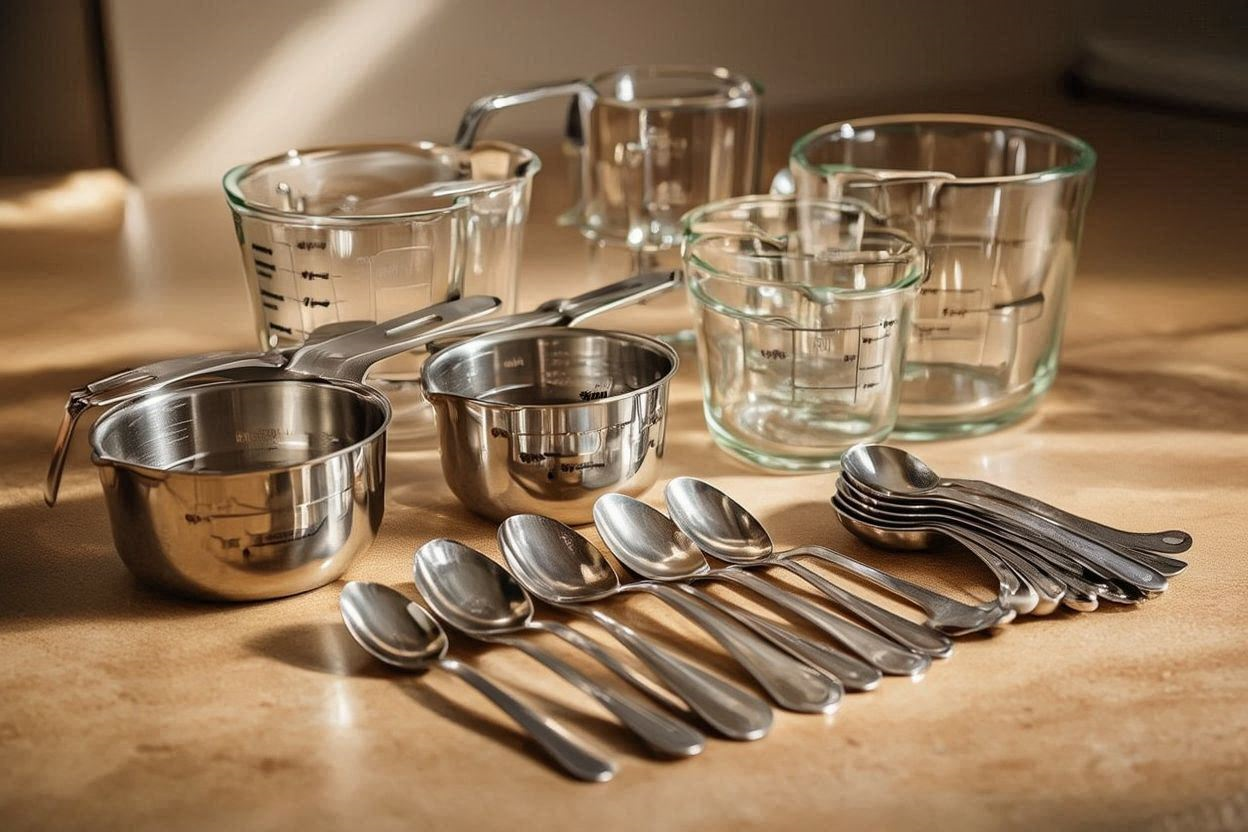
⚠️ Warning: Using the wrong cups-to-grams conversion is the #1 reason home-baked goods fail. Flour measured incorrectly by just 30g can make cookies crumble, cakes sink, and bread refuse to rise. This chart fixes that — permanently.
1 cup of all-purpose flour = 120g. 1 cup of sugar = 200g. 1 cup of butter = 227g. Every ingredient weighs differently per cup because cups measure volume, not weight. Use the complete charts below for instant, accurate conversions for every ingredient in your kitchen.
Whether you are a home cook following an American recipe, a culinary student working with metric weights, or a professional chef scaling quantities up for service — this is the only cups-to-grams reference you will ever need. Bookmarked by over 10,000 bakers monthly.
Cups to Grams — Master Conversion Table (30 Ingredients)
This is the most complete single-table cups-to-grams reference available. Every value is based on the standard US cup (240ml) using the spoon-and-level measuring method for dry ingredients.
| Ingredient | 1 Cup | 3/4 Cup | 1/2 Cup | 1/4 Cup |
|---|---|---|---|---|
| All-purpose flour | 120g | 90g | 60g | 30g |
| Bread flour | 130g | 98g | 65g | 33g |
| Cake flour | 100g | 75g | 50g | 25g |
| Whole wheat flour | 130g | 98g | 65g | 33g |
| Self-raising flour | 125g | 94g | 63g | 31g |
| Almond flour | 96g | 72g | 48g | 24g |
| Coconut flour | 112g | 84g | 56g | 28g |
| Oat flour | 92g | 69g | 46g | 23g |
| Granulated sugar | 200g | 150g | 100g | 50g |
| Caster sugar | 200g | 150g | 100g | 50g |
| Brown sugar (packed) | 220g | 165g | 110g | 55g |
| Powdered/icing sugar | 120g | 90g | 60g | 30g |
| Coconut sugar | 180g | 135g | 90g | 45g |
| Butter (softened) | 227g | 170g | 113g | 57g |
| Coconut oil | 218g | 164g | 109g | 55g |
| Vegetable oil | 218g | 164g | 109g | 55g |
| Honey | 340g | 255g | 170g | 85g |
| Maple syrup | 322g | 242g | 161g | 81g |
| Cocoa powder | 85g | 64g | 43g | 21g |
| Cornstarch / cornflour | 128g | 96g | 64g | 32g |
| Baking powder | 230g | 173g | 115g | 58g |
| Salt (table) | 273g | 205g | 137g | 68g |
| White rice (uncooked) | 185g | 139g | 93g | 46g |
| Brown rice (uncooked) | 190g | 143g | 95g | 48g |
| Rolled oats | 90g | 68g | 45g | 23g |
| Quinoa (uncooked) | 170g | 128g | 85g | 43g |
| Desiccated coconut | 80g | 60g | 40g | 20g |
| Chocolate chips | 170g | 128g | 85g | 43g |
| Milk (whole) | 240g | 180g | 120g | 60g |
| Water | 240g | 180g | 120g | 60g |
The 5 Most Common Cups-to-Grams Mistakes (And How to Avoid Them)
These mistakes are made by beginners and experienced home bakers alike. Culinary schools spend entire lessons fixing these habits. Knowing them puts you ahead of 90% of home cooks.
| Mistake | What Goes Wrong | The Fix |
|---|---|---|
| Scooping flour directly with the cup | Adds 20-40g extra flour per cup — makes baked goods dense and dry | Spoon flour into the cup, then level off |
| Assuming 1 cup = 250g for everything | 1 cup = 250g only for water. Flour = 120g, sugar = 200g | Always check ingredient-specific chart |
| Using packed flour instead of sifted | Packed cup can weigh 150g+ instead of 120g | Never pack flour — spoon and level only |
| Confusing brown sugar packed vs unpacked | Packed = 220g, Unpacked = 150g — a 70g difference | Recipes always specify packed unless stated otherwise |
| Using UK/Aus tablespoon for US recipe | UK tablespoon = 17.7ml vs US = 14.8ml — 20% more per spoon | Check which measurement system your recipe uses |
Cups to Grams — Flour (Detailed)
| Cups | All-Purpose | Bread Flour | Cake Flour | Whole Wheat |
|---|---|---|---|---|
| 1/8 cup | 15g | 16g | 13g | 16g |
| 1/4 cup | 30g | 33g | 25g | 33g |
| 1/3 cup | 40g | 43g | 33g | 43g |
| 1/2 cup | 60g | 65g | 50g | 65g |
| 2/3 cup | 80g | 87g | 67g | 87g |
| 3/4 cup | 90g | 98g | 75g | 98g |
| 1 cup | 120g | 130g | 100g | 130g |
| 1.5 cups | 180g | 195g | 150g | 195g |
| 2 cups | 240g | 260g | 200g | 260g |
| 3 cups | 360g | 390g | 300g | 390g |
Cups to Grams — Sugar (All Types)
| Cups | Granulated | Brown (packed) | Powdered | Coconut Sugar |
|---|---|---|---|---|
| 1/4 cup | 50g | 55g | 30g | 45g |
| 1/3 cup | 67g | 73g | 40g | 60g |
| 1/2 cup | 100g | 110g | 60g | 90g |
| 3/4 cup | 150g | 165g | 90g | 135g |
| 1 cup | 200g | 220g | 120g | 180g |
| 1.5 cups | 300g | 330g | 180g | 270g |
| 2 cups | 400g | 440g | 240g | 360g |
Cups to Grams — Fats, Oils and Liquids
| Cups | Butter | Coconut Oil | Honey | Maple Syrup |
|---|---|---|---|---|
| 1/4 cup | 57g | 55g | 85g | 81g |
| 1/3 cup | 76g | 73g | 113g | 107g |
| 1/2 cup | 113g | 109g | 170g | 161g |
| 3/4 cup | 170g | 164g | 255g | 242g |
| 1 cup | 227g | 218g | 340g | 322g |
| 2 cups | 454g | 436g | 680g | 644g |
Pro Chef Hacks — Hidden Conversion Tips Most Recipes Never Tell You
These are the insider tricks used in professional kitchens and culinary institutes worldwide. Most home bakers never learn these — which is exactly why their results are inconsistent.
- The cold butter trick: Cold butter straight from the fridge weighs the same as softened butter (227g per cup) but takes up less space. Always weigh butter in grams rather than packing it into a cup — you can be off by 30g either way.
- Powdered sugar always needs sifting first: Unsifted powdered sugar = 120g per cup. Sifted = 100g per cup. Most recipe failures with frostings come from skipping this step.
- Honey and maple syrup are best measured by weight: Honey is 340g per cup — but it sticks to measuring cups and you always lose some. Weigh directly into your bowl on a tared scale to get the exact amount with zero waste.
- Cocoa powder compresses more than any other ingredient: A scooped cup of cocoa = 110g+. A spooned and levelled cup = 85g. That 25g difference changes the entire chocolate intensity of your recipe.
- The nutrition label hack: If an ingredient isn’t in any conversion chart, check its nutrition label. Divide the serving size (in grams) by the serving size (in cups/tablespoons) to get your exact grams-per-cup value.
Why Grams Are Always More Accurate Than Cups
A cup is a unit of volume — it measures how much space something takes up. A gram is a unit of weight. Because different ingredients have vastly different densities, the same cup volume weighs completely different amounts depending on what is inside.
This is why every professional bakery, culinary school, and serious recipe developer uses grams — not cups. When a Michelin-starred pastry chef makes croissants, they do not say “3 cups of flour.” They say “360 grams of flour.” The precision is non-negotiable at that level. For your home baking, adopting the same habit eliminates the single biggest source of recipe failure. See our complete guide on grams to cups flour for the reverse conversion.
How to Measure Correctly — The Method That Changes Everything
- Fluff first — stir the ingredient in its container to break up settled pockets.
- Spoon in — use a separate spoon to transfer the ingredient into your measuring cup. Never scoop directly.
- Level off — sweep a flat knife across the top to remove the surplus.
- Better still — weigh it — place your bowl on a scale, press tare/zero, and add ingredients directly. Eliminates all variance.
✅ Scale recommendation: A digital kitchen scale accurate to 1g costs under $15 and is the single most impactful baking tool you can own. If you bake more than twice a month it pays for itself in saved ingredients within weeks.
Cups to Grams — Grains, Seeds and Specialty Ingredients
| Ingredient | 1 Cup | 1/2 Cup | 1/4 Cup |
|---|---|---|---|
| White rice (uncooked) | 185g | 93g | 46g |
| Brown rice (uncooked) | 190g | 95g | 48g |
| Quinoa (uncooked) | 170g | 85g | 43g |
| Rolled oats | 90g | 45g | 23g |
| Steel-cut oats | 160g | 80g | 40g |
| Breadcrumbs (dry) | 110g | 55g | 28g |
| Breadcrumbs (fresh) | 60g | 30g | 15g |
| Chia seeds | 160g | 80g | 40g |
| Flaxseeds (whole) | 150g | 75g | 38g |
| Sesame seeds | 145g | 73g | 36g |
| Sunflower seeds | 140g | 70g | 35g |
| Desiccated coconut | 80g | 40g | 20g |
| Chocolate chips | 170g | 85g | 43g |
| Chopped walnuts | 120g | 60g | 30g |
| Whole almonds | 145g | 73g | 36g |
Frequently Asked Questions
How many grams is 1 cup of flour?
1 cup of all-purpose flour = 120g. Bread flour = 130g per cup. Cake flour = 100g per cup. The difference matters — using all-purpose flour values for cake flour adds 20g per cup which makes sponge cakes heavy. See our detailed guide on 1 cup of flour in grams.
How many grams is 1 cup of sugar?
1 cup of granulated sugar = 200g. Brown sugar packed = 220g. Powdered sugar = 120g. Coconut sugar = 180g. For every sugar type see our full guide on 1 cup of sugar in grams.
Is 1 cup always 250g?
No — 1 cup = 250g is only true for water and most liquids. For dry ingredients the weight varies completely by ingredient. Flour is 120g, sugar is 200g, butter is 227g, honey is 340g. Using 250g as a universal value for dry ingredients is one of the most common baking mistakes.
How do I convert cups to grams without a scale?
Use the master table at the top of this page. Find your ingredient, find your cup amount, and read the gram value directly. For ingredients not listed, check the nutrition label — divide grams per serving by cups per serving to get grams per cup.
Why does my recipe say cups but I only have a scale?
You are actually in the better position. Use this chart to find your ingredient’s gram value, weigh it directly on the scale, and proceed. Grams on a scale are more accurate than cups anyway. For tablespoon conversions see our guide on how many tablespoons in a cup.
How many grams is 2 cups of flour?
2 cups of all-purpose flour = 240g. Bread flour = 260g. Cake flour = 200g. This is one of the most important conversions to know — most standard cake and cookie recipes use 1.5–2.5 cups of flour.
📌 Summary — Cups to Grams
• 1 cup all-purpose flour = 120g
• 1 cup bread flour = 130g
• 1 cup cake flour = 100g
• 1 cup granulated sugar = 200g
• 1 cup brown sugar = 220g
• 1 cup powdered sugar = 120g
• 1 cup butter = 227g
• 1 cup honey = 340g
• 1 cup rolled oats = 90g
• 1 cup white rice = 185g
• 1 cup cocoa powder = 85g
• 1 cup chocolate chips = 170g
Related: Grams to cups flour · 1 cup flour in grams · 1 cup sugar in grams · Tablespoons in a cup · Grams in an ounce · ml in a cup