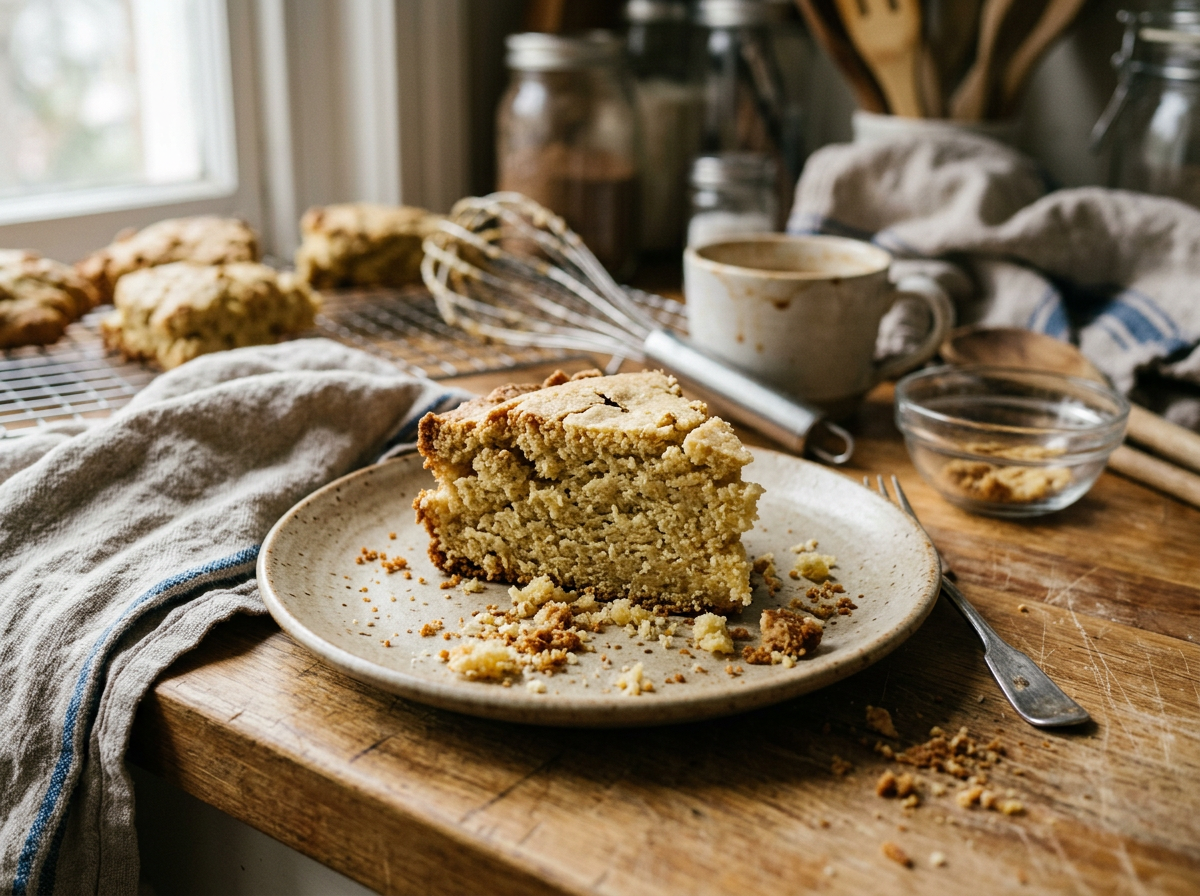
😞 You did everything right. You followed the recipe, the kitchen smelled amazing, the cake rose beautifully — and then you opened the oven and watched the middle collapse into a sad, dense valley. It is one of the most heartbreaking moments in baking. The good news: a sunken cake is almost always caused by one of a few specific, fixable mistakes. Let us find yours.
The quick answer: Cakes sink in the middle when the structure sets before it finishes rising — or rises too fast and then collapses. The most common causes are opening the oven too early, too much leavening (baking powder or soda), underbaking, or an oven that runs cooler than its dial claims. Below we break down all 8 causes and exactly how to fix each one.
A cake rising is a race between two things: the gas bubbles pushing the batter up, and the egg and flour structure setting firm enough to hold that height. When the timing of that race goes wrong, gravity wins and the center falls. Every sunken cake traces back to a disruption in that balance. Here are the eight reasons it happens, ranked from most to least common.

Reason 1: You Opened the Oven Door Too Early
This is the number one cause, and it breaks hearts because it feels so innocent. You just wanted to peek. But in the first two-thirds of baking, your cake is a delicate balloon of hot air and steam. Opening the door lets a rush of cold air in and drops the oven temperature by 20-40°F in seconds. The half-set structure cannot cope with that sudden change, and the center sinks.
✅ The fix: Do not open the oven door until at least 75% of the baking time has passed. If a recipe bakes for 40 minutes, leave the door shut for the first 30. Use the oven light and look through the glass instead.
Reason 2: Too Much Baking Powder or Baking Soda
It seems logical that more leavening means a taller cake. The opposite is true. Too much baking powder or soda makes the batter rise very fast and create large air bubbles — then those bubbles grow too big, burst, and the whole structure deflates before it can set. The cake shoots up, then falls flat in the center.
✅ The fix: Measure leavening precisely — 1 teaspoon of baking powder per cup of flour is the standard ratio. Level every spoonful with a flat knife. Never eyeball it. For exact measuring see our guide on how many tablespoons in a cup.
Reason 3: The Cake Was Underbaked
If the center never fully cooked, it never developed the structure to hold itself up. You take the cake out, it looks done on top, but the middle is still partly liquid batter — and as it cools, that center sinks under its own weight. This is especially common with dense cakes like pound cake and chocolate cake.
✅ The fix: Test with a skewer or toothpick in the very center — it should come out clean or with a few dry crumbs, never wet batter. If the top is browning too fast but the center is raw, tent loosely with foil and keep baking.
Reason 4: Your Oven Runs Cooler Than the Dial Says
Here is a secret most home bakers never discover: home ovens are frequently off by 25-50°F from what the dial shows. If your oven runs cool, the cake takes longer to set, rises slowly, and can collapse before the structure firms up. Many “mystery” sinking cakes are simply an inaccurate oven.
✅ The fix: Buy a cheap oven thermometer (a few dollars) and hang it inside. Compare it to your dial and adjust accordingly. This single tool solves a huge number of baking problems permanently.
Reason 5: You Overmixed the Batter
Once flour meets liquid, mixing develops gluten — the protein network that gives structure. A little is good. Too much makes the batter tough and traps excess air that expands rapidly in the oven, then collapses. Overmixing is especially common when using an electric mixer on high speed.
✅ The fix: Once you add the flour, mix only until no dry streaks remain. Finish by hand with a spatula. The batter should look just combined, not smooth and whipped.
Reason 6: Expired Leavening Agent
Baking powder and baking soda lose their power over time. If yours is old, the cake will not rise properly and can rise partway then sink. Most people keep the same tub of baking powder for years without realizing it stopped working months ago.
✅ The fix: Test baking powder by stirring 1 teaspoon into hot water — it should fizz immediately. Test baking soda with a little vinegar. No strong reaction means replace it. Replace both every 6-12 months.
Reason 7: Too Much Liquid or Sugar
An unbalanced recipe — or a measuring error — that adds too much liquid, sugar, or fat weakens the structure. Sugar and liquid both keep the batter soft and delay setting, so the cake stays fragile for longer and is more likely to fall. This often happens when scaling a recipe up or down incorrectly.
✅ The fix: Measure every ingredient accurately, ideally by weight. When scaling a recipe, scale every ingredient by the same ratio. See our guide on cups to grams for precise measuring.
Reason 8: You Moved or Bumped the Cake While Baking
A physical jolt — sliding the pan, slamming the oven door, or moving the rack — while the cake is still soft can knock the delicate structure and cause it to deflate. The batter is like a set of fragile scaffolding until it fully bakes.
✅ The fix: Place the pan gently, close the door softly, and do not move the cake until it is fully set. Save any rack adjustments for before you put the cake in.
Quick Diagnosis — Match Your Cake to the Cause
| What You Saw | Most Likely Cause | Go To |
|---|---|---|
| Rose beautifully, then sank when door opened | Opened oven too early | Reason 1 |
| Shot up fast, then collapsed flat | Too much leavening | Reason 2 |
| Sank while cooling on the counter | Underbaked center | Reason 3 |
| Never rose much at all | Cool oven or dead leavening | Reasons 4 & 6 |
| Dense, tough, and sunken | Overmixed batter | Reason 5 |
| Wet, gummy streak in the middle | Too much liquid/sugar | Reason 7 |
Can You Save a Sunken Cake?
Yes — do not throw it away. A sunken cake almost always still tastes delicious. Here are three rescue ideas:
- Fill the crater: Cut out the sunken center and fill the hole with frosting, whipped cream, or fresh fruit. Instant “filled” cake — nobody will know.
- Make trifle: Cube the cake and layer it with custard, cream, and fruit in a glass. A classic dessert born from imperfect cake.
- Make cake pops: Crumble the cake, mix with a little frosting, roll into balls, and coat in chocolate. Turns a “failed” cake into a treat everyone loves.
Frequently Asked Questions
Why did my cake sink in the middle after baking?
The most common reason is opening the oven door too early, which drops the temperature and collapses the half-set structure. Other frequent causes are too much baking powder, underbaking, or an oven that runs cooler than its dial shows.
Does too much baking powder make a cake sink?
Yes. Too much baking powder makes the cake rise too fast and create oversized air bubbles that burst and deflate before the structure sets. Use about 1 teaspoon of baking powder per cup of flour and measure it level.
Can I open the oven while baking a cake?
Not during the first two-thirds of baking. Wait until at least 75% of the baking time has passed before opening the door, or the sudden cold air can cause the center to sink.
Is a sunken cake still safe to eat?
Yes, as long as it is fully baked. If the center is still wet batter, it is underbaked and should not be eaten raw — but a fully cooked cake that simply sank is perfectly safe and usually still delicious.
How do I stop my cake sinking next time?
Keep the oven door closed for the first 75% of baking, measure leavening precisely, check your oven with a thermometer, do not overmix, and test the center with a skewer before removing. Fixing these five things prevents almost every sunken cake.
📌 Summary — Why Cakes Sink in the Middle
• Opened oven door too early (most common)
• Too much baking powder or soda
• Underbaked center
• Oven runs cooler than the dial
• Overmixed batter
• Expired leavening
• Too much liquid or sugar
• Bumped while baking
Related: Tablespoons in a cup · Cups to grams · Grams to cups flour · ml in a cup