Introduction
Cooking and baking often require converting ingredients between different measurements. Whether you’re doubling a recipe or adjusting serving sizes, a kitchen measurement conversion chart can save time and prevent mistakes.
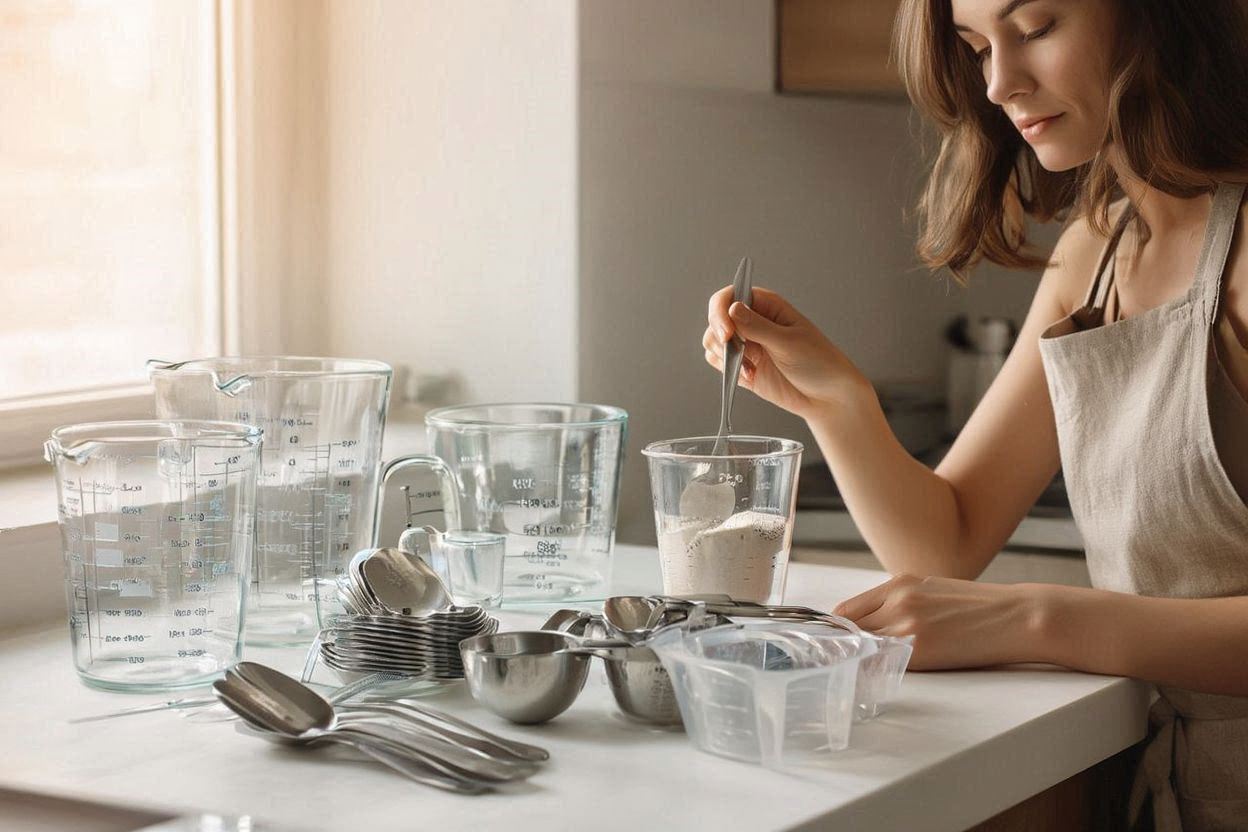
Many home cooks struggle with conversions such as:
- Tablespoons to cups
- Cups to quarts
- Teaspoons to tablespoons
- Ounces to cups
This guide provides a simple conversion chart you can use anytime in the kitchen. You can also bookmark or print it for quick reference while cooking.
Basic Kitchen Measurement Conversions
Here are the most common measurement conversions used in everyday cooking.
| Measurement | Conversion |
|---|---|
| 1 tablespoon | 3 teaspoons |
| 1 cup | 16 tablespoons |
| 1 cup | 8 fluid ounces |
| 1 pint | 2 cups |
| 1 quart | 4 cups |
| 1 gallon | 16 cups |
These conversions are used in most American recipes and are helpful for both beginners and experienced cooks.
Tablespoon and Teaspoon Conversions
Small ingredient amounts are usually measured using teaspoons and tablespoons.
| Tablespoons | Teaspoons |
|---|---|
| 1 tablespoon | 3 teaspoons |
| 2 tablespoons | 6 teaspoons |
| 4 tablespoons | 12 teaspoons |
| 8 tablespoons | 24 teaspoons |
These measurements are often used when preparing sauces, spices, or baking ingredients.
Cup Conversion Chart
Cups are one of the most common units used in recipes.
| Cups | Tablespoons |
|---|---|
| 1 cup | 16 tablespoons |
| 3/4 cup | 12 tablespoons |
| 1/2 cup | 8 tablespoons |
| 1/3 cup | 5 tablespoons + 1 teaspoon |
| 1/4 cup | 4 tablespoons |
Knowing these conversions can help when you don’t have the exact measuring cup available.
Liquid Measurement Conversions
Liquids are usually measured using cups, pints, quarts, and gallons.
| Measurement | Equivalent |
|---|---|
| 1 cup | 8 fluid ounces |
| 2 cups | 1 pint |
| 4 cups | 1 quart |
| 16 cups | 1 gallon |
These conversions are useful when measuring liquids like milk, broth, oil, or juice.
Why Accurate Measurements Matter
Cooking can sometimes be flexible, but baking requires precision.
Incorrect measurements can cause problems such as:
• Dense cakes or bread
• Dry cookies
• Thin sauces
• Unbalanced flavors
Using proper measuring tools and following standard conversions helps ensure consistent results.
Tips for Accurate Measuring
Professional cooks follow simple habits to improve accuracy.
Use the right measuring tool
Dry measuring cups should be used for flour and sugar, while liquid measuring cups are better for milk, water, or oil.
Level dry ingredients
Always level ingredients like flour or cocoa powder with a flat edge.
Check liquids at eye level
Place the measuring cup on a flat surface and read the measurement line from the side.
These techniques help prevent common cooking mistakes.
Choosing Reliable Measuring Tools
A good set of measuring cups and spoons can make cooking easier and more precise.
Look for tools that have:
- Clear measurement markings
- Durable materials like stainless steel
- Comfortable handles
- Accurate standard sizes
If you’re looking for reliable measuring tools, you can explore our detailed guide:
Best Measuring Cups and Spoons Top Picks
This guide compares several measuring sets designed for accuracy and long-term kitchen use.
Final Thoughts
A kitchen measurement conversion chart is one of the most useful tools for home cooks and bakers.
By understanding basic conversions and using reliable measuring tools, you can prepare recipes more confidently and avoid common cooking mistakes.
Saving or printing this chart makes it easy to reference whenever you need quick measurement conversions in the kitchen.