
Introduction
You followed the recipe carefully.
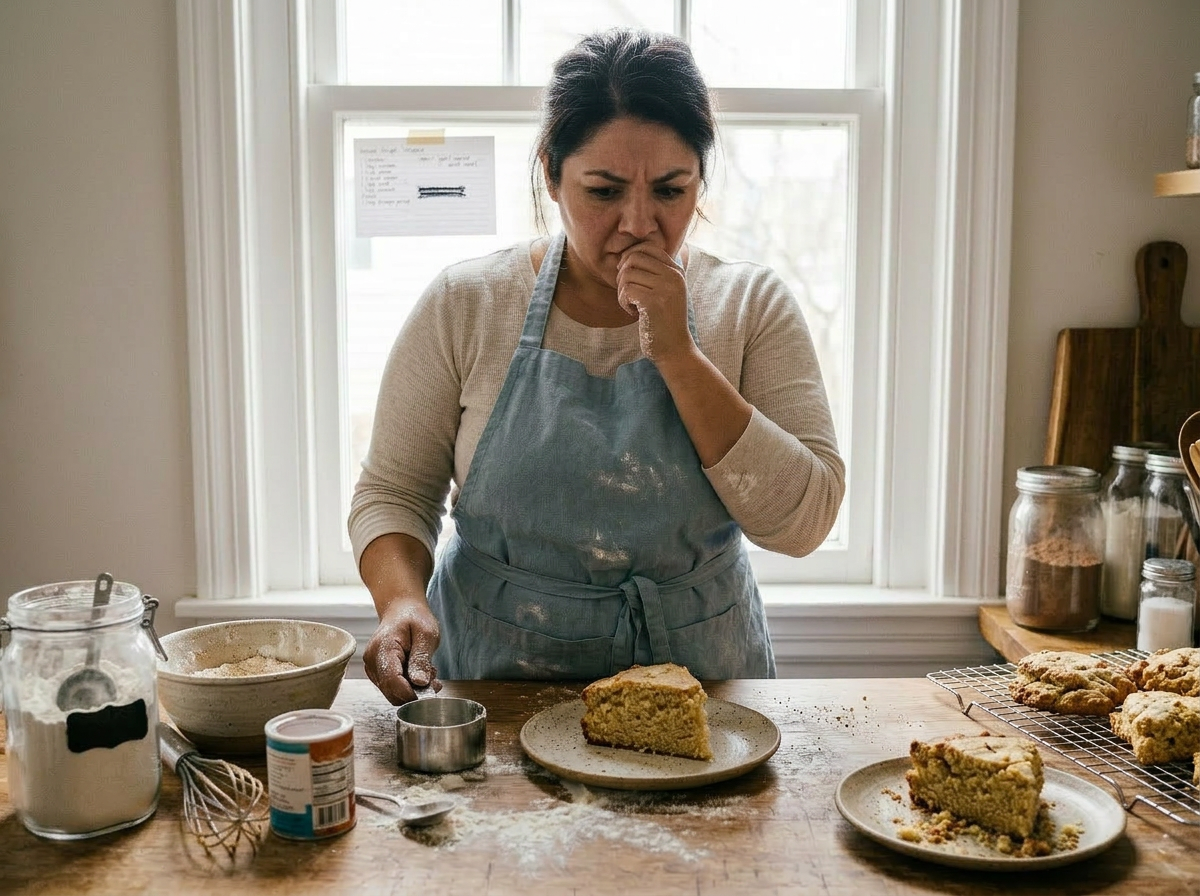
You mixed the ingredients exactly as instructed.
The cake looked perfect in the oven.
But when you finally tasted it… it was dry, crumbly, and disappointing.
This happens to thousands of home bakers every day. Many people blame:
- the oven
- the recipe
- the baking time
But professional bakers know something different.
Most dry cakes happen because of simple measuring mistakes.
The truth is that baking is more precise than most people realize. A small measurement error can completely change the texture of a cake. The good news is that once you understand the real causes, dry cakes become much easier to avoid.
The Hidden Flour Problem
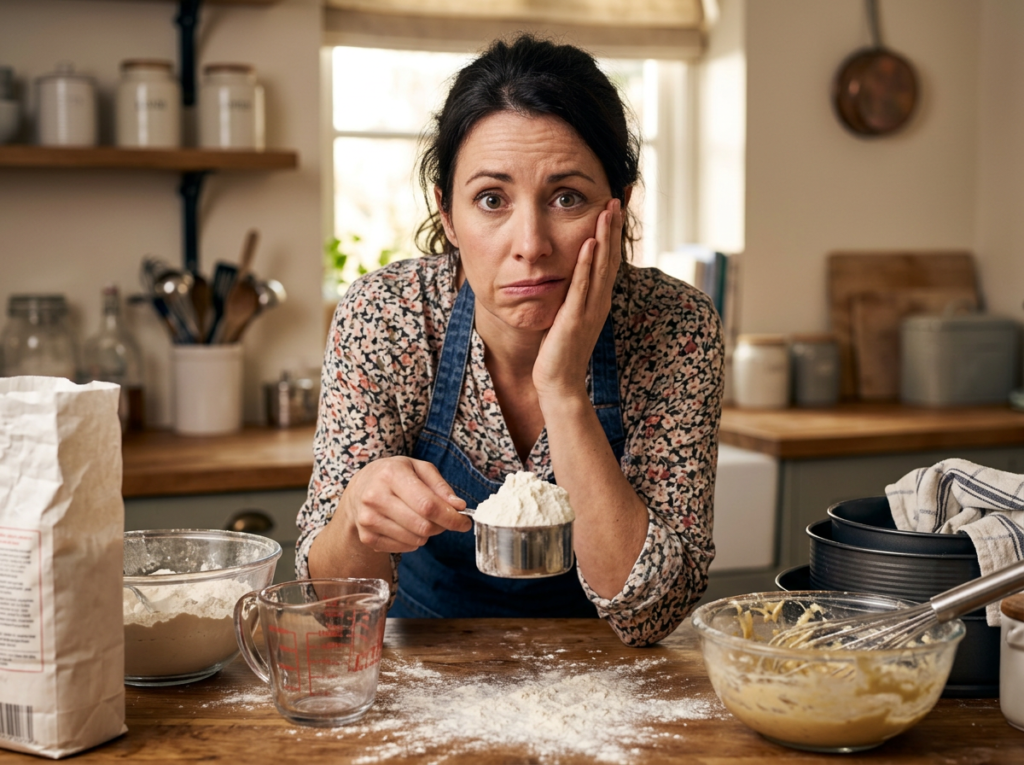
The most common reason cakes turn dry is too much flour.
Flour absorbs moisture. When too much flour is added, the batter becomes heavier and less moist.
The result is:
- dense texture
- crumbly slices
- dry mouthfeel
This mistake usually happens when flour is measured incorrectly. Many home cooks scoop flour directly from the container, which packs extra flour into the measuring cup. Professional bakers avoid this method completely, using the spoon-and-level method instead. Learn it in our guide on how to measure flour correctly.
The Butter and Fat Balance
Another reason cakes become dry is not enough fat. Butter and oil provide moisture and softness in cakes. If the recipe ratio changes slightly—especially when ingredients are measured incorrectly—the cake loses its tender texture.
This is why precise measurement matters so much in baking. Even a small difference in ingredient balance can affect the final result.
Overbaking: A Common but Fixable Mistake
Many cakes turn dry simply because they stay in the oven too long. Ovens vary in temperature, even when set to the same number. A cake that bakes perfectly at 30 minutes in one oven might need only 25 minutes in another.
A good habit is to check your cake 5 minutes before the recommended baking time. Insert a toothpick in the center:
- if it comes out clean, the cake is ready
- if batter sticks, it needs more time
Small adjustments like this help prevent overbaking. For related baking fixes, see our guide on why your cake sinks in the middle.
The Mixing Mistake Most Beginners Make
Overmixing cake batter can also lead to dry cakes. When flour is mixed too much, gluten develops more strongly. This makes cakes:
- tougher
- denser
- less moist
The best method is to mix just until the ingredients are combined. The batter should look smooth but not heavily beaten.
Why Accurate Measuring Tools Matter
Reliable measuring tools help prevent many baking problems. Over time, cheap measuring cups can lose their markings or vary slightly in size, which quietly throws off your ingredient ratios.
When choosing a measuring set, look for these qualities:
- clear engraved measurements that won’t fade
- durable stainless steel construction
- accurate, standard cup sizes
- long-lasting design
A quality stainless steel set keeps your measurements consistent bake after bake — which is exactly what tender, moist cakes depend on.
Quick Checklist to Prevent Dry Cakes
Before baking your next cake, check these simple steps:
✔ Measure flour using the spoon-and-level method
✔ Avoid packing flour into measuring cups
✔ Mix batter gently
✔ Check the cake early to prevent overbaking
✔ Use accurate measuring tools
These small adjustments can dramatically improve cake texture.
Related Kitchen Guides You May Find Helpful
You may also find these guides useful:
• How Many Tablespoons in a Cup
• Cups to Grams Conversion Chart
• Why Your Cake Sinks in the Middle
These guides help explain measurement mistakes that affect many recipes.
Final Thoughts
Dry cakes can feel discouraging, especially when you followed the recipe carefully. But the truth is simple. Most baking problems come from small measuring habits that are easy to fix.
Once you start measuring ingredients correctly and watching baking time carefully, your cakes will become:
- softer
- lighter
- more flavorful
And baking will feel much more rewarding.